 Prevention
The importance of regular dental check-ups
How a 30-minute visit every 6 months can spot small problems early and save you years of complex treatment.
Read articleA clear, honest comparison of comfort, cost, longevity and daily care to help you choose confidently.
By Dr. Anandam Bandyopadhyay
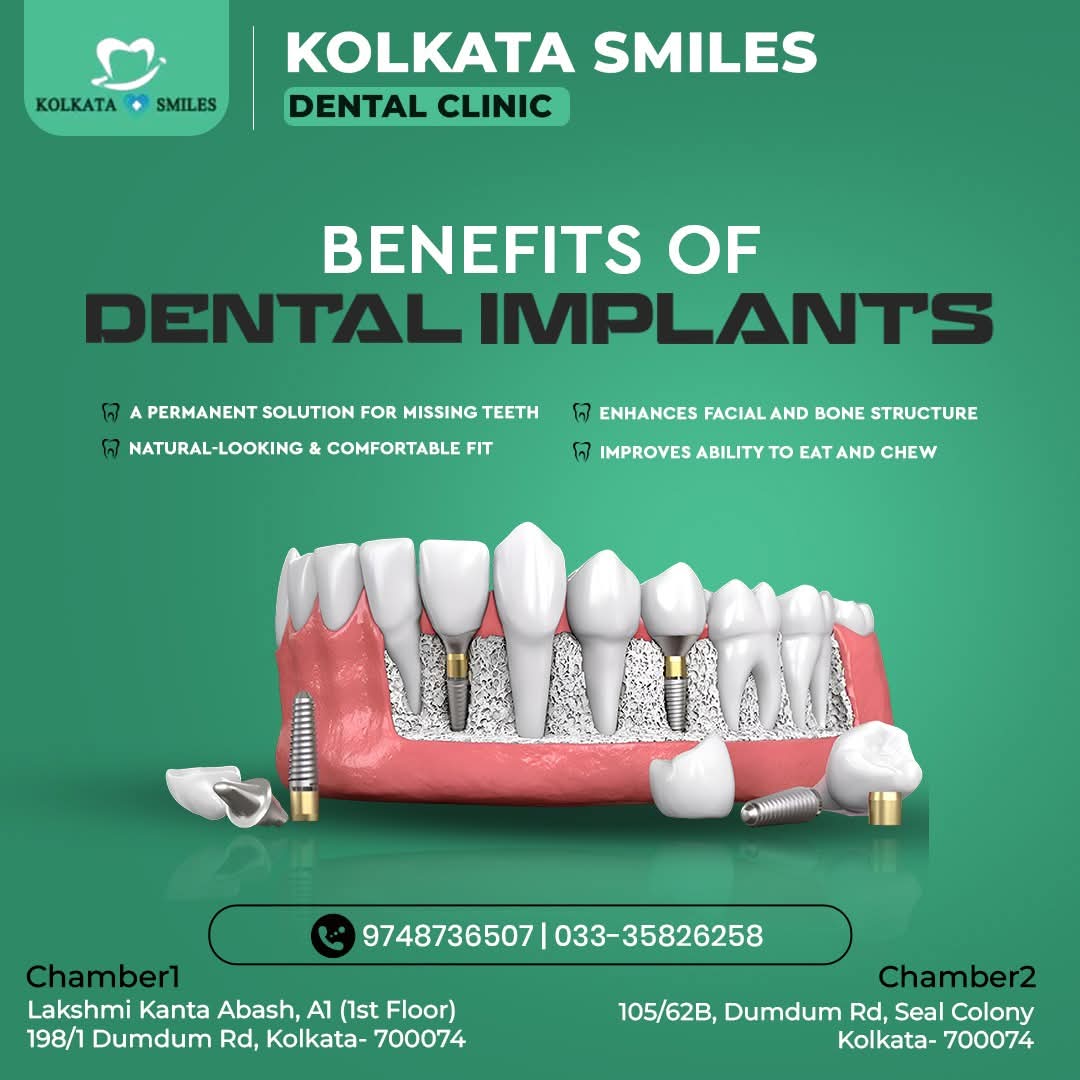
Losing a tooth is more than cosmetic. It changes how you eat, how clearly you speak, how food is digested and, over the years, even how your face looks as the underlying bone slowly shrinks away. Today you have two proven ways to replace missing teeth: dental implants and dentures. Neither option is universally 'better' — the right choice depends on your bone health, your budget, your daily lifestyle and your long-term goals. This honest guide from Kolkata Smiles, Dum Dum, breaks down every angle so you can walk into your consultation already informed.
A dental implant is a small, biocompatible titanium screw placed into your jawbone under local anaesthesia. Over 3–6 months the surrounding bone fuses to the implant surface in a process called osseointegration, effectively turning it into an artificial tooth root. A custom-shaded ceramic crown is then permanently fixed on top. The result looks, feels and functions like a natural tooth — you brush and floss it exactly the same way.
Dentures are removable prosthetic teeth mounted on a gum-coloured acrylic base. They can replace a few missing teeth (partial dentures) or an entire arch (complete dentures). Modern dentures use flexible, lightweight materials and digitally designed shapes, making them far more natural-looking, better-fitting and less bulky than the pink plastic plates your grandparents wore.
Implants win here decisively. They do not move, never need adhesive, and let you eat everything — including apples, corn on the cob, hard nuts and sticky sweets — with full confidence. Because the biting force is transmitted through bone (as with natural teeth), chewing efficiency is typically 90–100% of natural.
Dentures have improved dramatically, but even a very well-fitting denture can shift slightly while chewing tough foods, and chewing efficiency is usually 20–50% of natural. Some patients find speech takes a week or two to adapt. An implant-retained denture — snapped onto 2 to 4 implants — largely solves both problems.
Dentures cost significantly less upfront and can be delivered in 1–2 weeks. Implants cost more initially and take 3–6 months to complete from start to final crown.
Over a 20-year horizon, however, implants are often the more economical choice. A well-cared-for implant can last a lifetime, while dentures typically need relining every 3–5 years, and complete replacement every 7–10 years as your gums and jawbone continue to change shape.
At Kolkata Smiles we always share a clear cost breakdown for both options and, where appropriate, a phased plan so treatment fits your budget.
This is the factor most patients never hear about — and it changes everything. When a tooth is lost, the jawbone under it slowly shrinks because it is no longer being stimulated. Implants transmit natural chewing forces into the bone exactly like a real root, preserving both bone volume and facial structure.
Dentures rest on the gums and do not stimulate the underlying bone, which is why long-term full-denture wearers can develop a 'sunken', prematurely aged lower face over 10–15 years. If you value long-term facial aesthetics, this is a major point in favour of implants.
Implants are cleaned with a normal soft toothbrush, floss (or interdental brushes) and a night-time mouthwash — exactly like natural teeth. Two check-ups a year monitor the gum seal around the implant.
Dentures need to be removed and cleaned every night with a soft brush and denture cleaner, then stored in water. Gums also need a nightly rest from the denture to stay healthy.
Neither option is 'high maintenance', but implants match the routine you already have; dentures add a step.
Implants suit healthy adults with reasonable bone density who want a permanent, natural-feeling solution and are comfortable investing more upfront for long-term value. Even patients with reduced bone can often qualify after a small bone graft.
Dentures suit patients who need a faster, more affordable option, those who are not candidates for surgery (due to certain systemic conditions), or those replacing many teeth in a single arch. An implant-supported denture is a superb compromise — 2 to 4 implants secure a removable denture that no longer moves.
Uncontrolled diabetes, heavy smoking and untreated gum disease reduce implant success — but all can usually be managed before treatment begins.
Step 1: A CBCT 3D scan maps your bone volume and nerve position with sub-millimetre precision. Step 2: The implant is placed under local anaesthesia in a 30–60 minute procedure. Step 3: A 3–6 month healing period lets bone fuse to the implant. Step 4: A digital impression captures the final crown shape. Step 5: The permanent crown is bonded and your bite is checked.
Most patients return to work the next day. Discomfort is typically no more than a routine extraction.
Key takeaway
Both implants and dentures can give you a confident smile. Book a free consultation at Kolkata Smiles and we'll help you decide based on your bone, budget and lifestyle.
The procedure is done under local anaesthesia and is comparable to a regular extraction. Most patients return to work the next day with mild soreness.
With good hygiene and regular check-ups, dental implants can last 25+ years — often a lifetime.
Yes. Many patients start with dentures and upgrade to implant-supported dentures or full implants when they are ready.
There is no upper age limit. General health matters more than age; we routinely place implants for patients in their 70s and 80s.
Bone grafting, sinus lifts and short/narrow implants have made implants possible for the vast majority of patients who were previously told 'no'.
Book an appointment at Kolkata Smiles, Dum Dum — modern technology, gentle care and honest advice.
PreventionHow a 30-minute visit every 6 months can spot small problems early and save you years of complex treatment.
Read article Daily Care
Small everyday changes that protect enamel, freshen breath and keep cavities away for life.
Read article Cosmetic
Cutting through the marketing: safe, dentist-approved options that give real, long-lasting results.
Read article